
Hog Trap Training Mode Setup
Conditioning hogs for successful capture using the P.I.G. Hog Trap system
Proper Training Mode setup is one of the most critical steps in achieving consistent and successful results with The P.I.G. Hog Trap. This process allows hogs to safely enter, feed, and become comfortable inside the trap before transitioning to full capture mode.
What You’ll Learn
- How to align trap openings with hog travel direction
- Proper strap adjustment and tensioning techniques
- How to control entry points for effective conditioning
- Optimal net positioning for hog entry and deer prevention
- Proven baiting strategy to create repeat feeding patterns
- When and how to transition into Trap Mode
Training Mode Overview
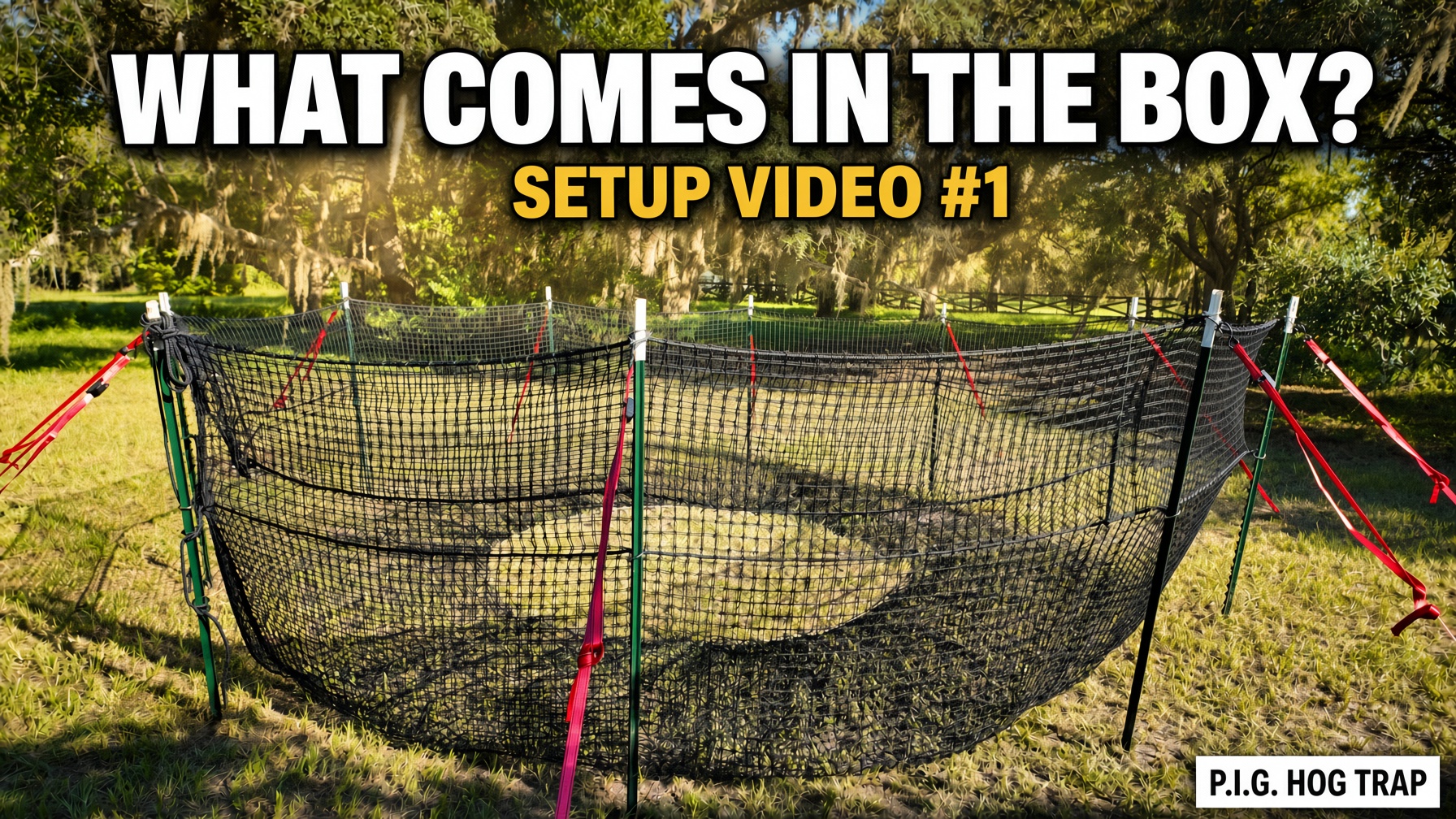
Training Mode creates a low-pressure environment where hogs can freely enter and exit the trap area. By maintaining two visible openings and ensuring proper net placement, hogs begin to associate the trap with a safe feeding zone.
Position your openings toward the direction hogs naturally approach. Visibility is key—hogs should be able to see completely through the trap as they enter.
Net Positioning & Entry Setup
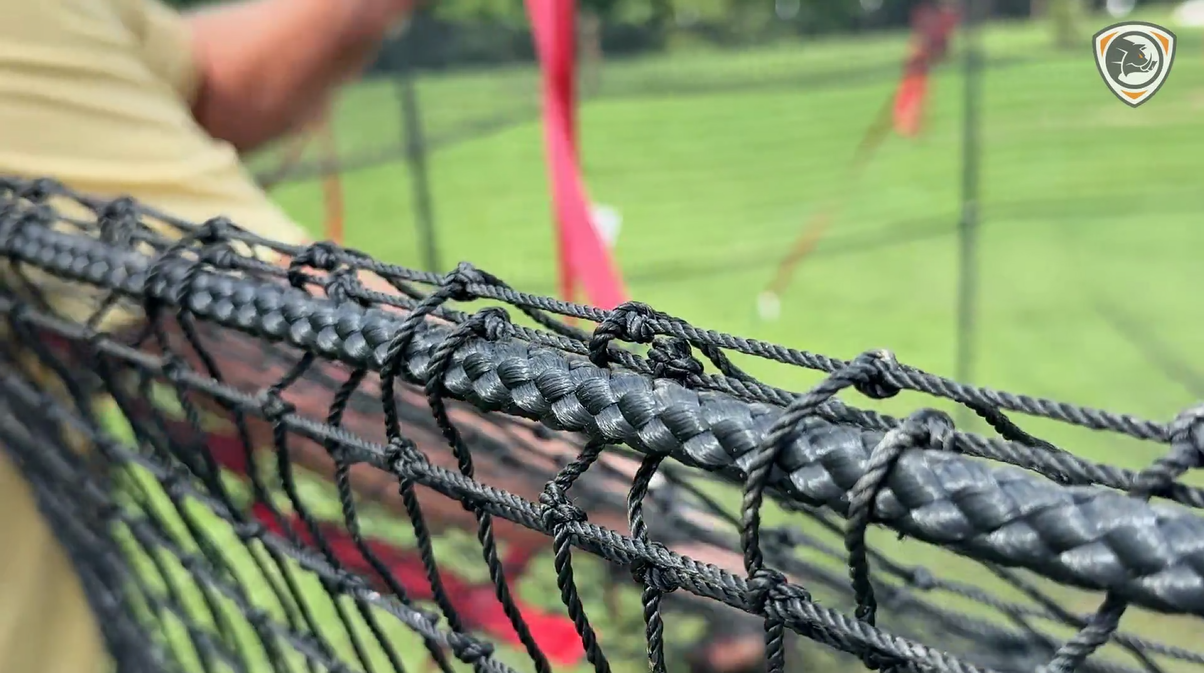
The net should be positioned low along the perimeter while allowing the center cable to rise slightly. This design encourages hogs to brush under the net as they enter while maintaining structural control.
Raising the center cable helps discourage deer entry while still allowing hogs to move comfortably inside the enclosure. Maintaining two wide, visible openings ensures consistent access and repeat entry behavior.
Baiting Strategy
Baiting plays a critical role in conditioning hog behavior. Start by feeding in the center of the trap while lightly scattering small amounts near entry points.
- Feed primarily in the center of the trap
- Lightly scatter bait just outside entry points
- Avoid overfeeding—only place what hogs will eat in one night
- Encourage consistent return visits over multiple nights
After one to three nights, hogs will begin feeding comfortably and remain relaxed within the trap area—this is when they are ready for capture.
Transitioning to Trap Mode
Once hogs are consistently feeding inside the trap, transition carefully into Trap Mode. Proper timing ensures maximum success and minimizes missed opportunities.
- Release and reposition straps as needed
- Reform the full trap structure
- Align and center the ring for proper shape
- Ensure a clean circular layout
With the trap fully configured, the system is now ready to capture hogs effectively.
Key Takeaways
- Training Mode builds trust before capture
- Proper entry alignment is critical for success
- Controlled baiting drives repeat behavior
- Net positioning impacts both hog access and deer control
- Patience during training leads to higher capture rates